CASE STUDY
Overview
I led the strategic redesign of the Norwich Public Schools website twice, serving as the client-side owner of the digital experience. I authored the RFP, defined experience and accessibility requirements, and partnered with Finalsite to select one of their existing CMS templates as the foundation.
Once the framework was established, I fully customized the site under my direction and built it within the CMS, translating strategy, structure, and design intent into a functional, community-facing platform.
Role: Digital Strategy, UX Direction, RFP Development, Site Build & Creative Oversight
Deliverables: Website redesign (two iterations), information architecture and navigation framework, homepage and interior page templates, accessibility and usability standards, content prioritization model, CMS site build
Deliverables: Website redesign (two iterations), information architecture and navigation framework, homepage and interior page templates, accessibility and usability standards, content prioritization model, CMS site build
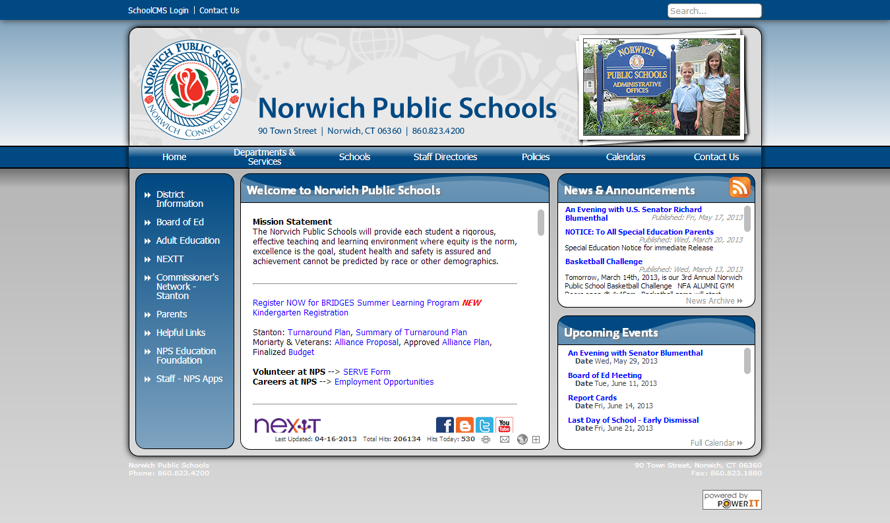
Original Website
Challenge
The existing website was difficult to navigate, visually dated, and misaligned with how families and community members accessed information. Content had accumulated over time without a clear structure, creating friction for non-technical and multilingual users.
The district needed a solution that:
– Served students, families, and the broader community
– Reduced friction by keeping key information within two to three clicks
– Made language translation immediately visible
– Supported growing digital and social communication efforts
– Met modern accessibility and ADA standards
– Reduced friction by keeping key information within two to three clicks
– Made language translation immediately visible
– Supported growing digital and social communication efforts
– Met modern accessibility and ADA standards
The second redesign required modernization without disrupting familiarity for users who relied on the site daily.
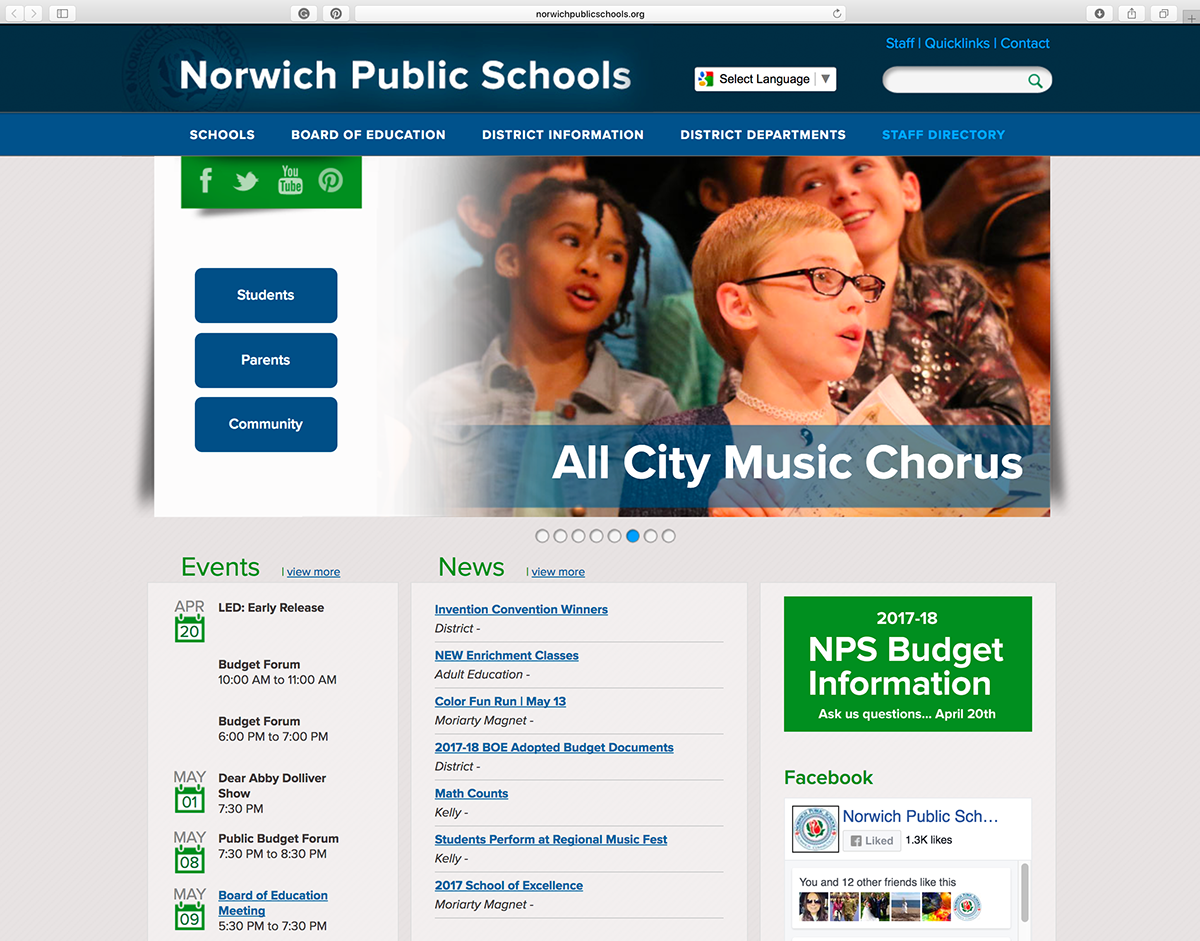
Redesign #1 in 2013
Strategy
I developed a comprehensive RFP that defined information architecture, navigation logic, accessibility standards, and success criteria before engaging a development partner.
Working from one of Finalsite’s pre-existing templates, we customized every aspect of the experience to align with district needs. This approach balanced efficiency with intentional design, allowing us to focus resources on usability, clarity, and long-term scalability.
Strategic priorities included:
– Audience-first navigation built around students, families, and the community
– Clear content hierarchy with critical information surfaced above and below the fold
– Prominent translation access to support multilingual households
– Integration of social media and announcements as core communication tools
– A flexible structure that could evolve without frequent redesigns
– Clear content hierarchy with critical information surfaced above and below the fold
– Prominent translation access to support multilingual households
– Integration of social media and announcements as core communication tools
– A flexible structure that could evolve without frequent redesigns
Design Approach
The design emphasized clarity, consistency, and trust. Visual decisions reinforced district branding while improving contrast, readability, and responsiveness.
The first redesign established a clean, timeless foundation. The second preserved that familiarity while introducing a refreshed visual language and improved accessibility. Throughout both iterations, I guided refinements, validated decisions against the original strategy, and ensured the final experience felt intuitive and stable for returning users.
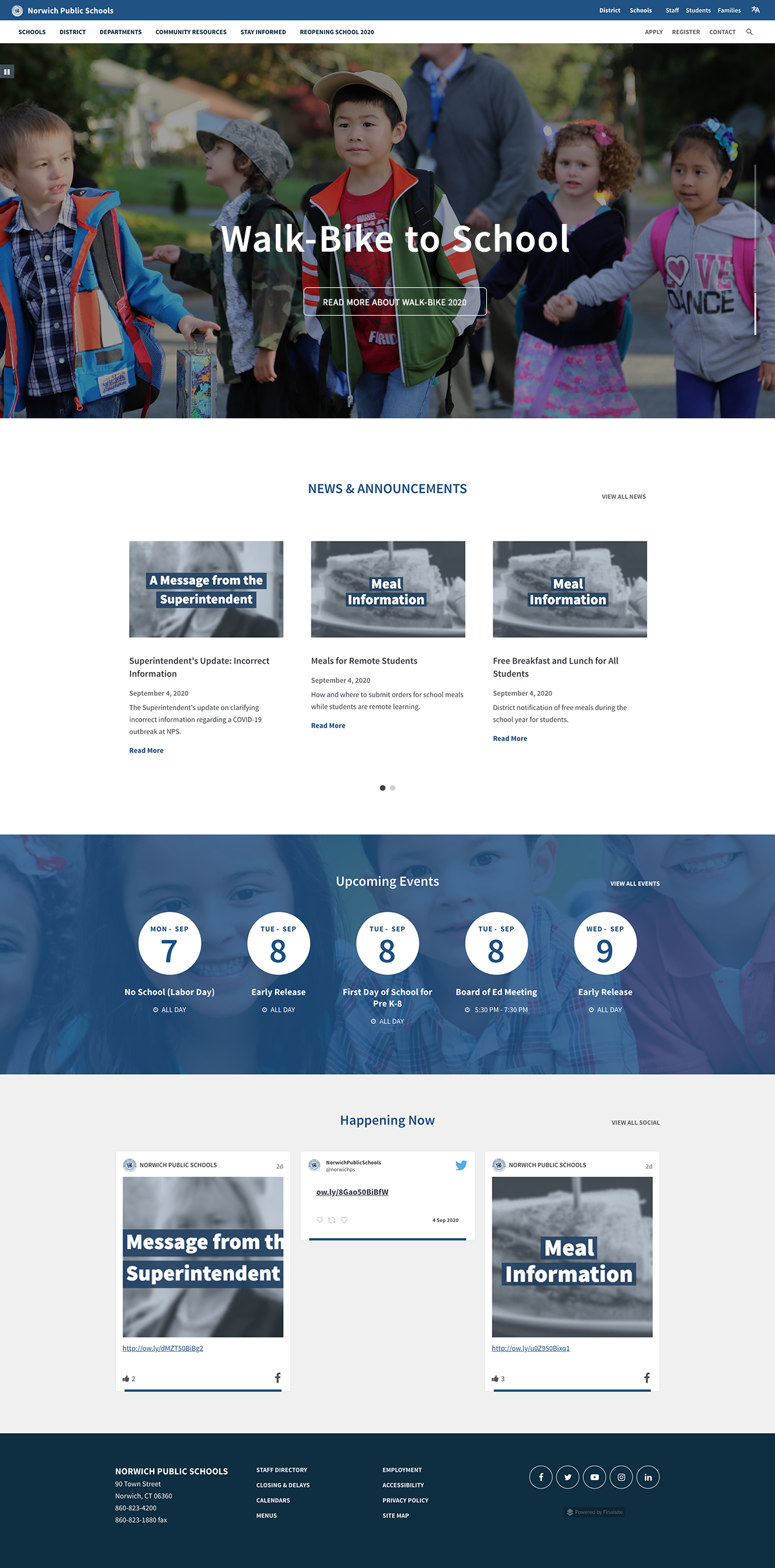
Redesign #2 in 2019
Outcome
The redesigned website delivered a scalable, accessible digital platform that improved usability and communication across the district. By combining strategic planning, disciplined customization, and hands-on site build execution, the project delivered a trusted digital hub that enabled transparency, engagement, and long-term sustainability.